A story for the family
Trophimus
A Greek from Ephesus walked beside Paul, and a city mistook that walk for a crime. His Greek name is Trophimos. In the church’s languages it became Trofim, written Трофим, and the surname Trofimciuc is built on that name. This is the story for the whole family, including anyone hearing it for the first time.
Four kinds of sentences
They are marked, so the kinds stay distinct. Scripture is what the Bible says. Later tradition is what churches told afterward. History and language is a stone, a date, or the shape of a word. This family’s reading is how we understand the moment he is known for. The close print, the variant copies and the lexicons, sits in the notes at the bottom.
Scripture
Later tradition
History & language
This family’s reading
Scene 1
A man of Ephesus
Scripture
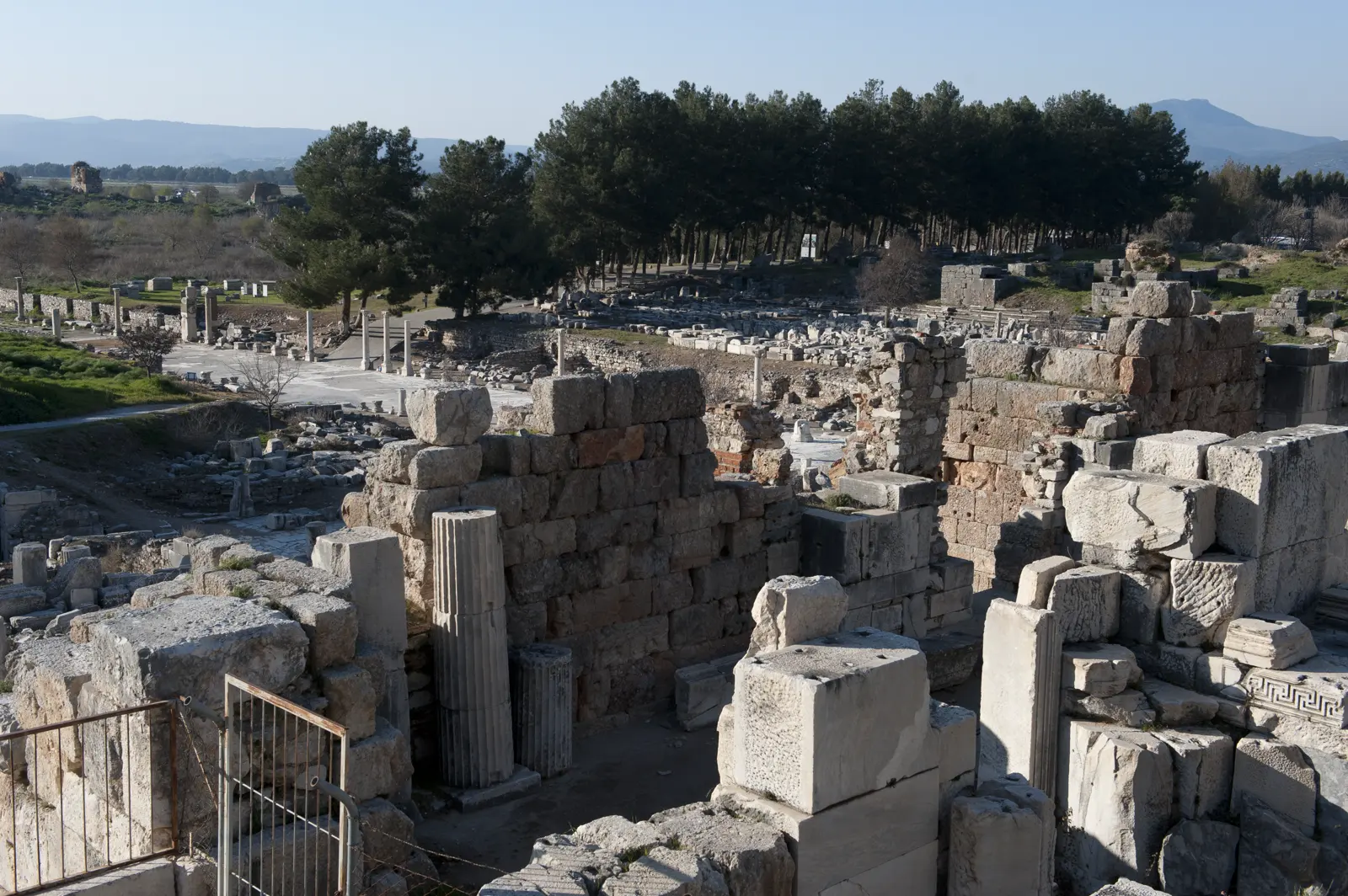
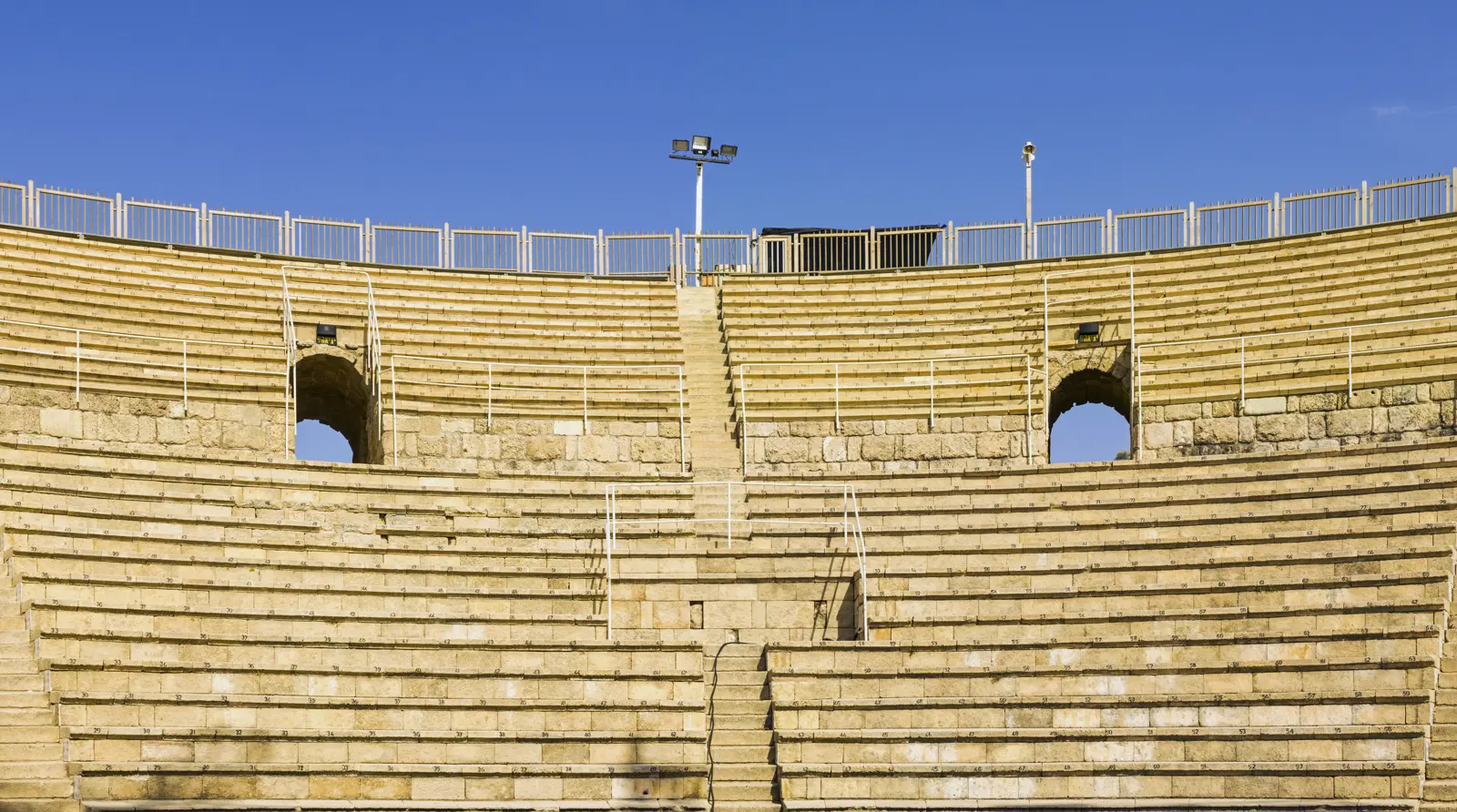
Acts gives him one city. When trouble starts in Jerusalem, Luke explains it with a name and a place: the accusers had seen “Trophimus the Ephesian” with Paul in the city. Ephesus was a great port of the Roman province of Asia, on the Aegean coast of what is now Turkey. The temple of Artemis stood there. So did a theatre. In an earlier riot, while Paul was in the city, the crowd dragged two of his Macedonian companions into that theatre. Trophimus is not named in that riot. The Bible never says when he began to travel with Paul. It says he was an Ephesian, and that people from Asia knew his face.
For they had seen Trophimus the Ephesian with him in the city, and they supposed that Paul had brought him into the temple.
The men who shouted treated him as a Greek who was not allowed inside the temple’s inner courts. Luke does not pause to define the word. The charge only works if Trophimus was a Gentile. That is the picture Acts gives: a Greek from Ephesus, known by sight to other people from Asia.
One widely used Orthodox life says he “hailed from the city of Edessa.” Acts 21:29 says Ephesus. This page follows Acts. Edessa is a different city, and that later sentence is a conflict, not a second fact.
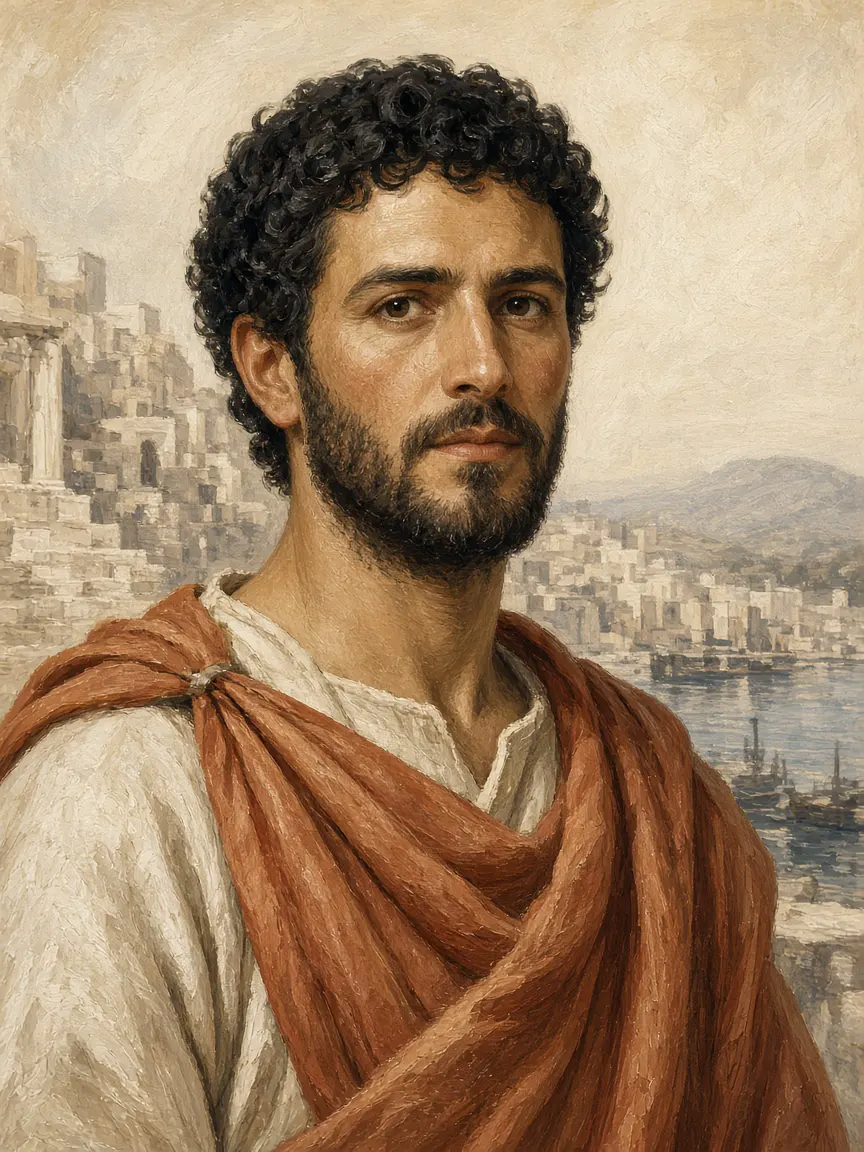
Artistic reconstruction. No authentic likeness of Trophimus survives.

Scene 2
From Greece toward Jerusalem
Scripture
After the uproar in Ephesus, Paul left for Macedonia and then Greece. He stayed in Greece three months. He meant to sail for Syria. A plot changed the plan, and he went back through Macedonia instead. Luke then names the men with him. Trophimus is one of two from Asia. The other is Tychicus.
Sopater of Beroea, the son of Pyrrhus, went with him, and Aristarchus and Secundus of the Thessalonians, Gaius of Derbe, Timothy, and, from Asia, Tychicus and Trophimus.
Some Bibles say the companions went only as far as Asia. The Greek text most translators now follow does not. Either reading still leaves Trophimus in Jerusalem, because Acts 21:29 finds him there. Luke never says which port he joined at, and there is no verse in which he turns back.
The companions went ahead and waited at Troas. Paul sailed from Philippi after the festival of Unleavened Bread and met them. One night he talked until midnight. A young man named Eutychus fell from a third-story window and was taken up dead. Paul went down, embraced him, and said his life was in him. They brought the boy in alive.
Then the coast: Assos, Mitylene, Chios, Samos, Miletus. Paul would not stop at Ephesus. He was trying to reach Jerusalem for Pentecost, and from Miletus he called the elders of that city to say goodbye. At that goodbye he told them he was going to Jerusalem bound by the Spirit, and that the Spirit kept testifying, in city after city, that chains and afflictions were waiting for him.
At Patara they found another ship, bound for Phoenicia. Cyprus stayed on the left. They landed at Tyre, and the disciples there said, through the Spirit, that he should not go up to Jerusalem. He went on, to Ptolemais and then to Caesarea. In Caesarea a prophet named Agabus took Paul’s belt, bound his own hands and feet, and said the Holy Spirit’s words: the Jews at Jerusalem would bind the owner of that belt and hand him over to the Gentiles. The friends begged Paul to stay. He answered that he was ready not only to be bound, but to die in Jerusalem for the name of the Lord Jesus. They went up anyway.
None of those warnings names Trophimus. They name chains. The next scenes are how Luke says the chains arrived.
Paul had asked the Gentile churches to set money aside for the poor in Jerusalem. He writes to Rome that Macedonia and Achaia have been pleased to make “a certain contribution for the poor among the saints who are at Jerusalem,” and that he is taking it. A few days after the arrest, on trial before Felix, he says he came “to bring gifts for the needy to my nation, and offerings.” The “some years” in that sentence are the years he had been away from Jerusalem, not years spent waiting for the trial. Readers have long taken the men of Acts 20:4 as the churches’ companions on that errand. Luke never calls Trophimus a treasurer, and he never says whose bag held the money. He does say Trophimus traveled with Paul on the journey Paul himself describes as a gift carried to Jerusalem.
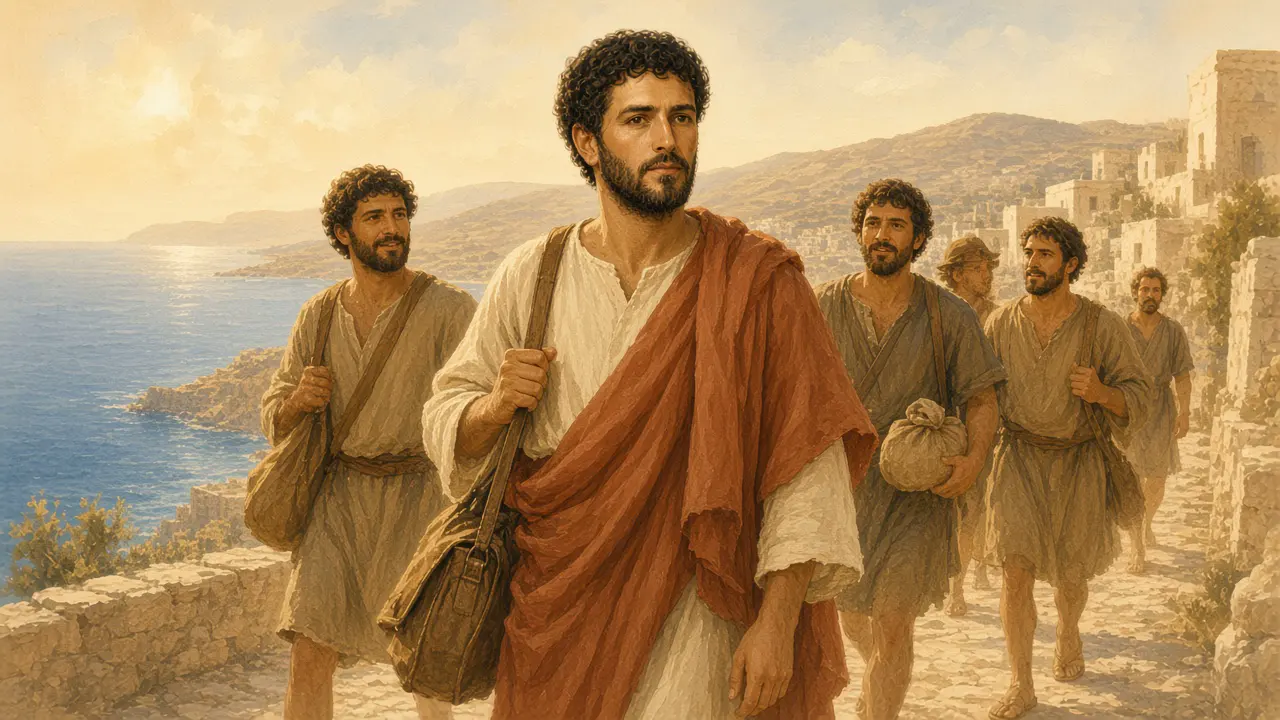
Artistic reconstruction. No authentic likeness of Trophimus survives.

Scene 3
Seen with Paul, in the city
Scripture
Jerusalem received them. The next day Paul went in to James, with the elders present, and told what God had done among the Gentiles. The elders were glad, and they were also worried. Thousands of Jewish believers, they said, had been told that Paul taught Jews living among Gentiles to abandon Moses. They asked him to join four men who were under a vow, to purify himself with them, and to pay their expenses, so that the city would see him keeping the law.
Paul did it. He went into the temple. When the seven days were almost completed, Jews from Asia saw him there. They were people who could recognize a man from their own province. Luke says they had already seen Trophimus the Ephesian with Paul in the city. From that sight they supposed Paul had taken him into the temple.
The verse is careful, and the care matters. It does not say Trophimus entered. It says he was seen in the city, and that other people supposed the rest. He is not arrested in this chapter. He is not quoted. He is recognized.
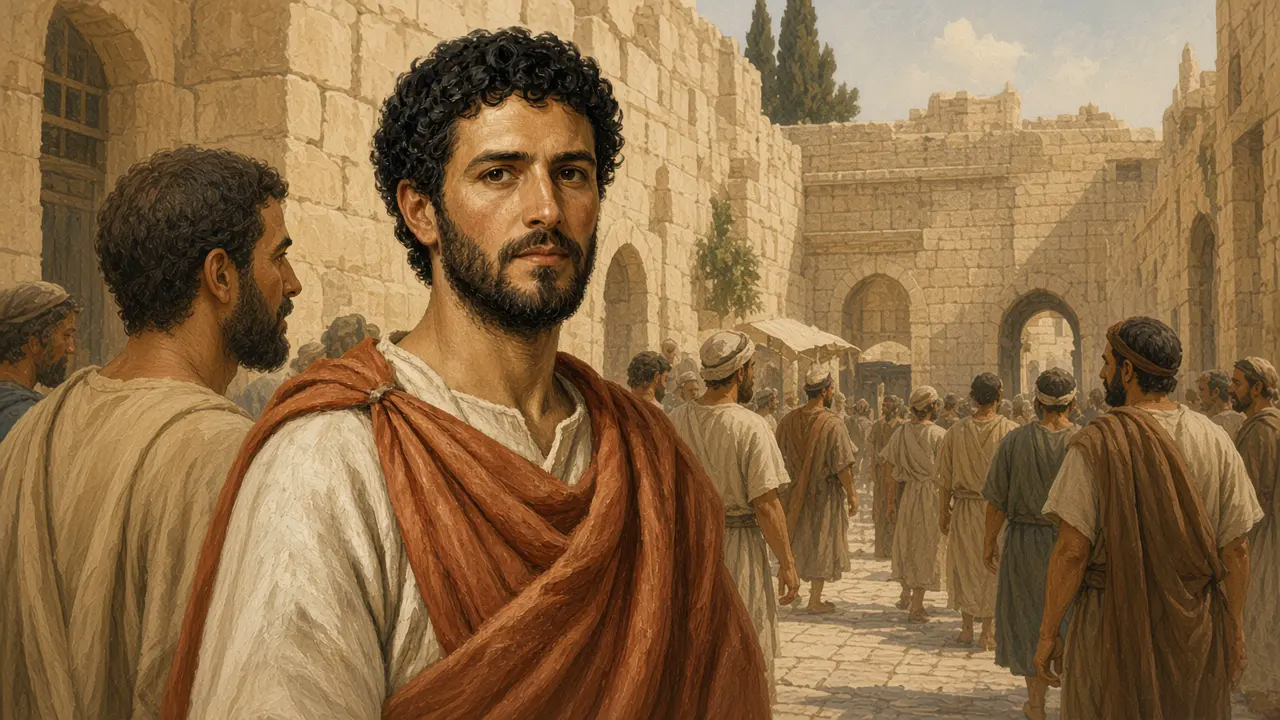
Artistic reconstruction. No authentic likeness of Trophimus survives.
Scene 4
The shout that was not true
Scripture
Men of Israel, help! This is the man who teaches all men everywhere against the people, and the law, and this place. Moreover, he also brought Greeks into the temple and has defiled this holy place!
For they had seen Trophimus the Ephesian with him in the city, and they supposed that Paul had brought him into the temple.
Two charges are shouted. One is about Paul’s teaching. The other is that he brought Greeks in and defiled the place. Luke spends his next sentence on the second charge, and he spends it in order to say the shouters were guessing. “Supposed” is the narrator’s word. The temple charge, as Acts tells it, is false.
History & language
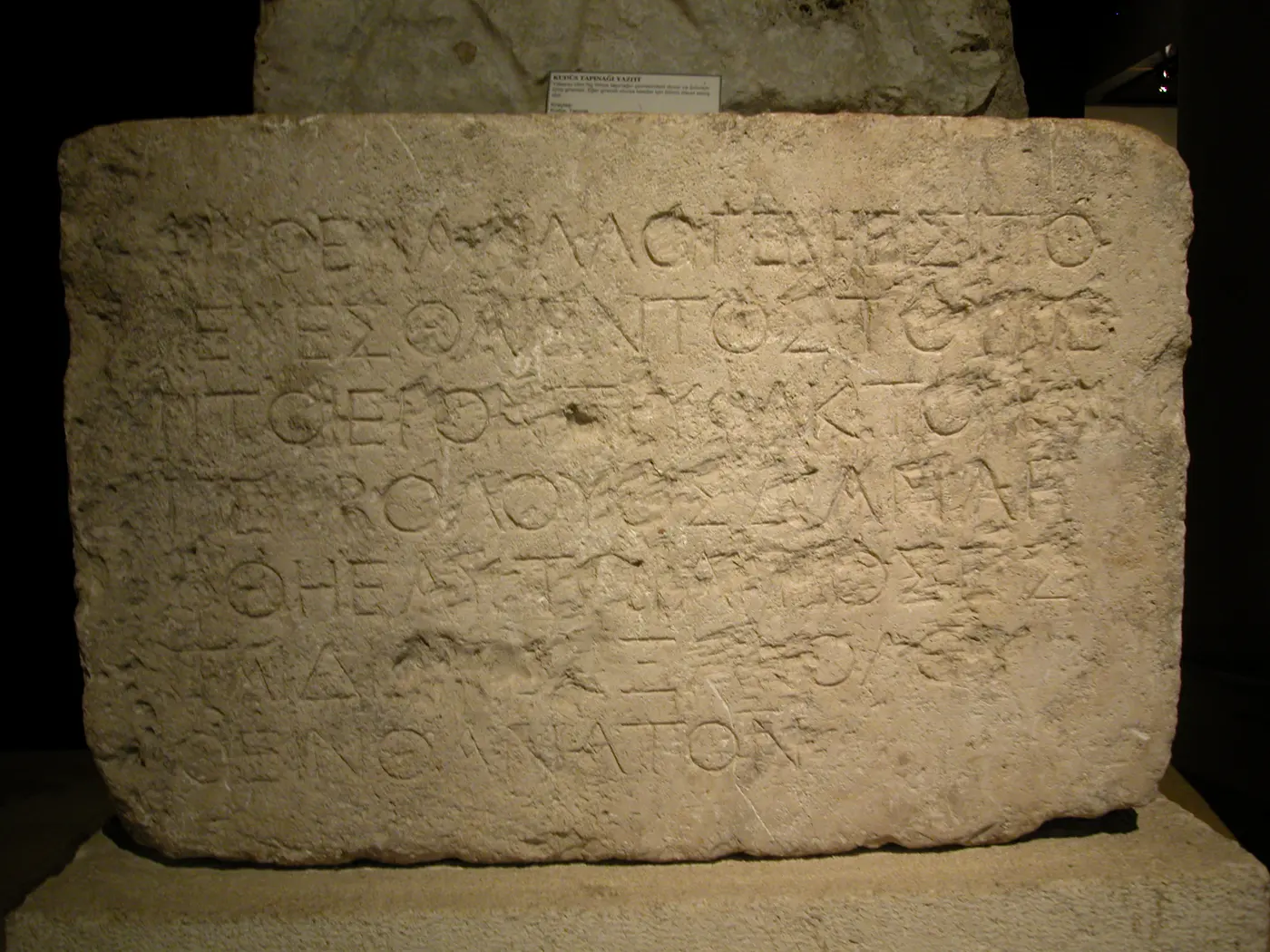
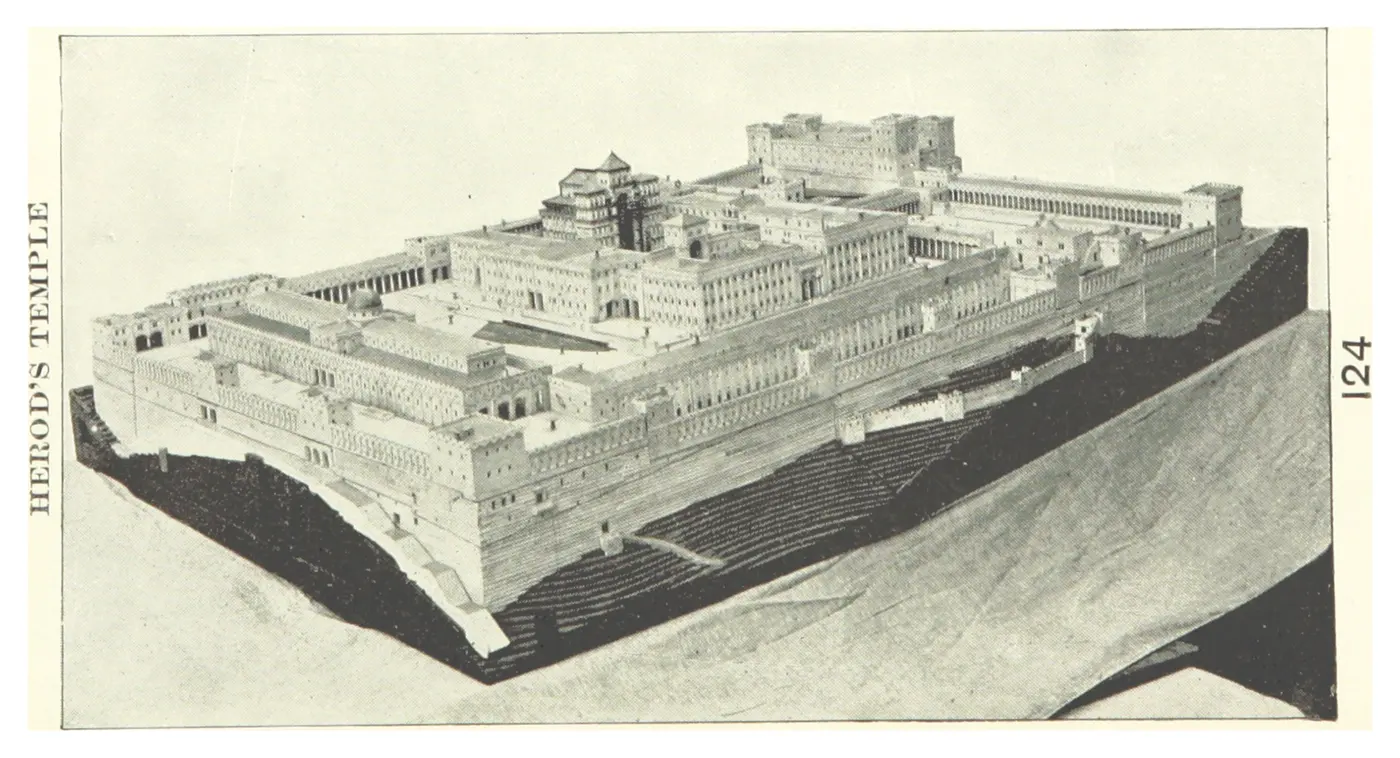
It was a charge that could get a man killed. Herod’s temple had an inner limit. Josephus, a Jewish historian of that century, describes a stone barrier around the sanctuary, with notices in Greek and in Latin that no foreigner was to go beyond them. A complete Greek notice was found in Jerusalem in 1871 and is now in the Istanbul Archaeology Museums. A second, broken copy was found near the Lions’ Gate and published in 1936. It is in the Israel Museum. A foreigner who crossed, the stone says, would have himself to blame for the death that followed.


Scene 5
The city moves, and Paul is chained
Scripture
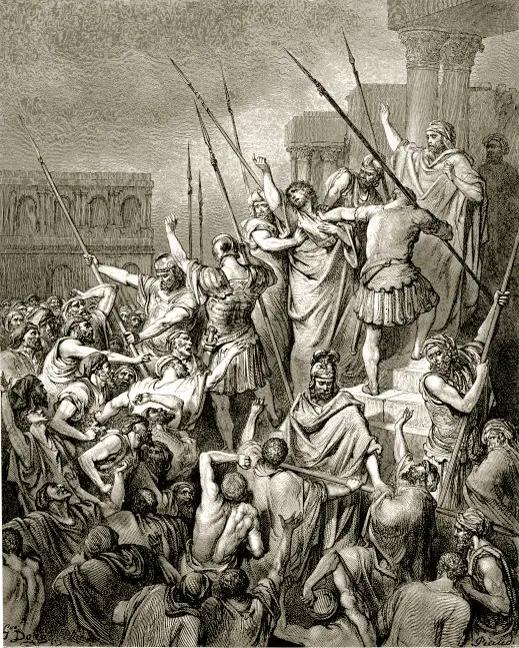
The whole city was stirred. People ran together, seized Paul, and dragged him out of the temple. The doors were shut at once. They were trying to kill him when word reached the Roman tribune, the commander of the cohort in the barracks beside the temple courts. He took soldiers and centurions and ran down. The beating stopped. The tribune arrested Paul, ordered him bound with two chains, and asked who he was and what he had done. The crowd shouted different answers. On the stairs the violence was such that the soldiers had to carry him. The people followed, crying, “Away with him!”
This was about the year 57. Trophimus is not arrested in these verses. The arrest Luke describes is Paul’s. The temple half of the outcry rests on the sight of Trophimus. The other half, the charge about his teaching, is shouted in the same breath. Agabus had said the owner of the belt would be bound and handed to the Gentiles. That is what the soldiers do.

Scene 6
Two years, then a new governor, then a king
Scripture
Paul was allowed to speak from the stairs in the language Luke calls Hebrew. Inside the barracks the soldiers stretched him out for a flogging. He asked whether it was legal to flog a Roman citizen who had not been condemned. The tribune, who had bought his own citizenship, was afraid when he learned that Paul had been born a citizen. The next day he brought Paul before the Sanhedrin. The hearing broke apart between Pharisees and Sadducees. More than forty men bound themselves not to eat or drink until they had killed him. His nephew heard of it. That night the tribune sent Paul, under heavy guard, to the governor Felix at Caesarea.
Five days later the high priest came down with an advocate named Tertullus. Paul tells Felix that he can check the date: it is not more than twelve days since Paul went up to Jerusalem to worship. The hearing is days after the arrest, not years. In that speech Tertullus repeats the temple charge: “He even tried to profane the temple.” Paul answers that he came, after some years away, to bring gifts for the needy. The Asian Jews who started the riot are not there to accuse him.
Felix did not decide the case. He hoped for money, and when two years had passed he left Paul in prison to please Paul’s accusers. Those two years are about 57 to 59. Porcius Festus took the governorship. The accusers came down again. Festus asked whether Paul would go up to Jerusalem to be judged. Paul refused to be handed over. He said he was standing at Caesar’s tribunal, where he ought to be tried.
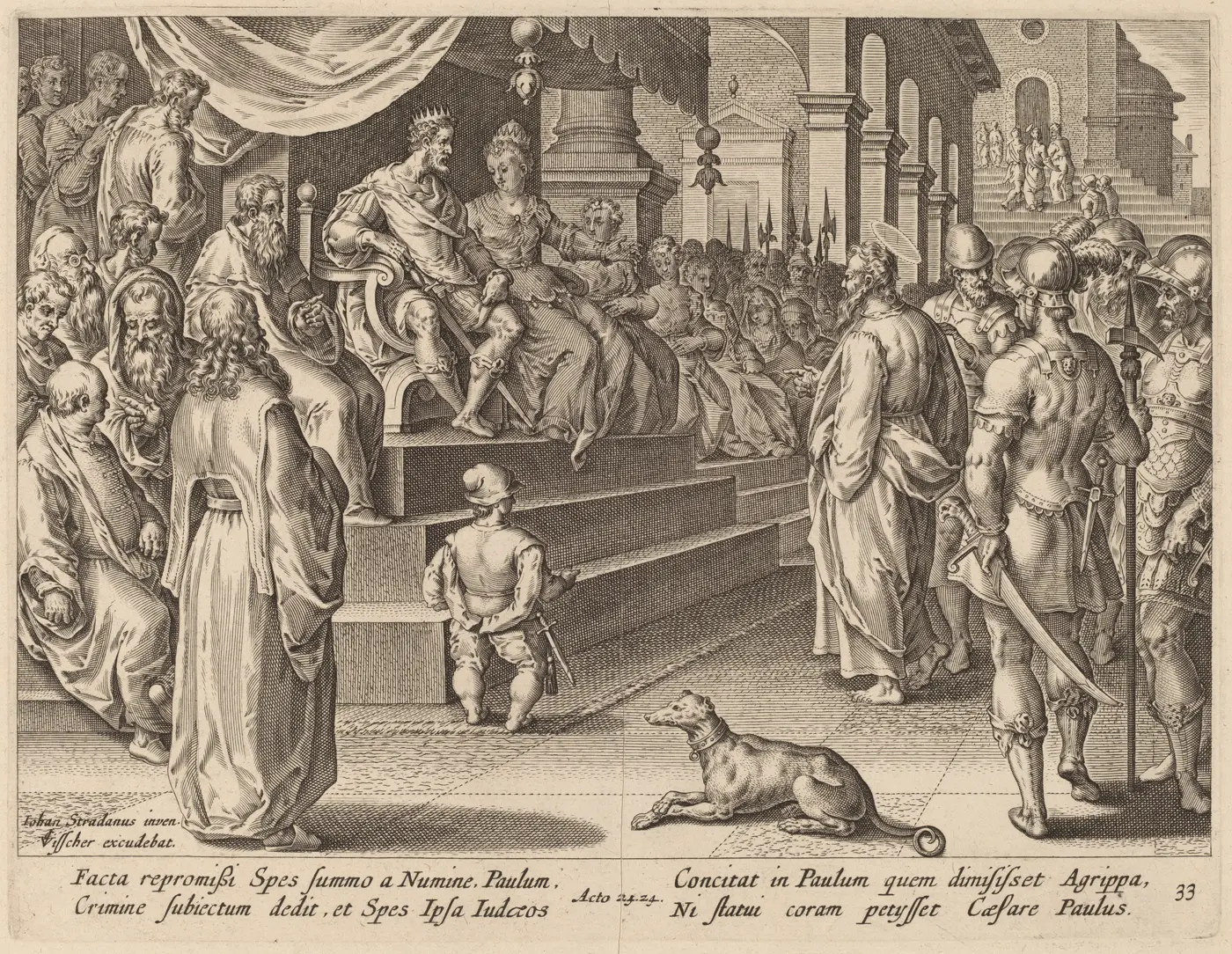
King Agrippa and Bernice arrived at Caesarea. Festus laid the case before them. He had, he said, nothing solid to write to the emperor. Agrippa agreed to hear Paul. Paul told the story of his life and of the resurrection. Festus called him mad. Agrippa asked whether Paul was trying to persuade him to become a Christian in so short a time. When they had withdrawn, the judgment among them was that Paul had done nothing worthy of death or chains.

Scene 7
“I appeal to Caesar.”
Scripture
I appeal to Caesar!
You have appealed to Caesar. To Caesar you shall go.
This man might have been set free if he had not appealed to Caesar.
Once Paul had named Caesar, Festus could no longer send the case back to Jerusalem. Rome had been named. After Agrippa heard him, the listeners said Paul might have been set free if he had not appealed. Luke then turns the book toward the sea. Paul had said, long before the riot, that after Jerusalem he must see Rome. The appeal is how that intention becomes a Roman voyage.

Scene 8
Storm, Malta, and a rented house
Scripture
Paul was handed to a centurion named Julius, of the Augustan cohort, to be taken to Italy. Aristarchus of Thessalonica sailed too. Luke’s “we” sails. Trophimus is not named on the ship. The voyage is the consequence of the arrest, not a passenger list with his name on it.
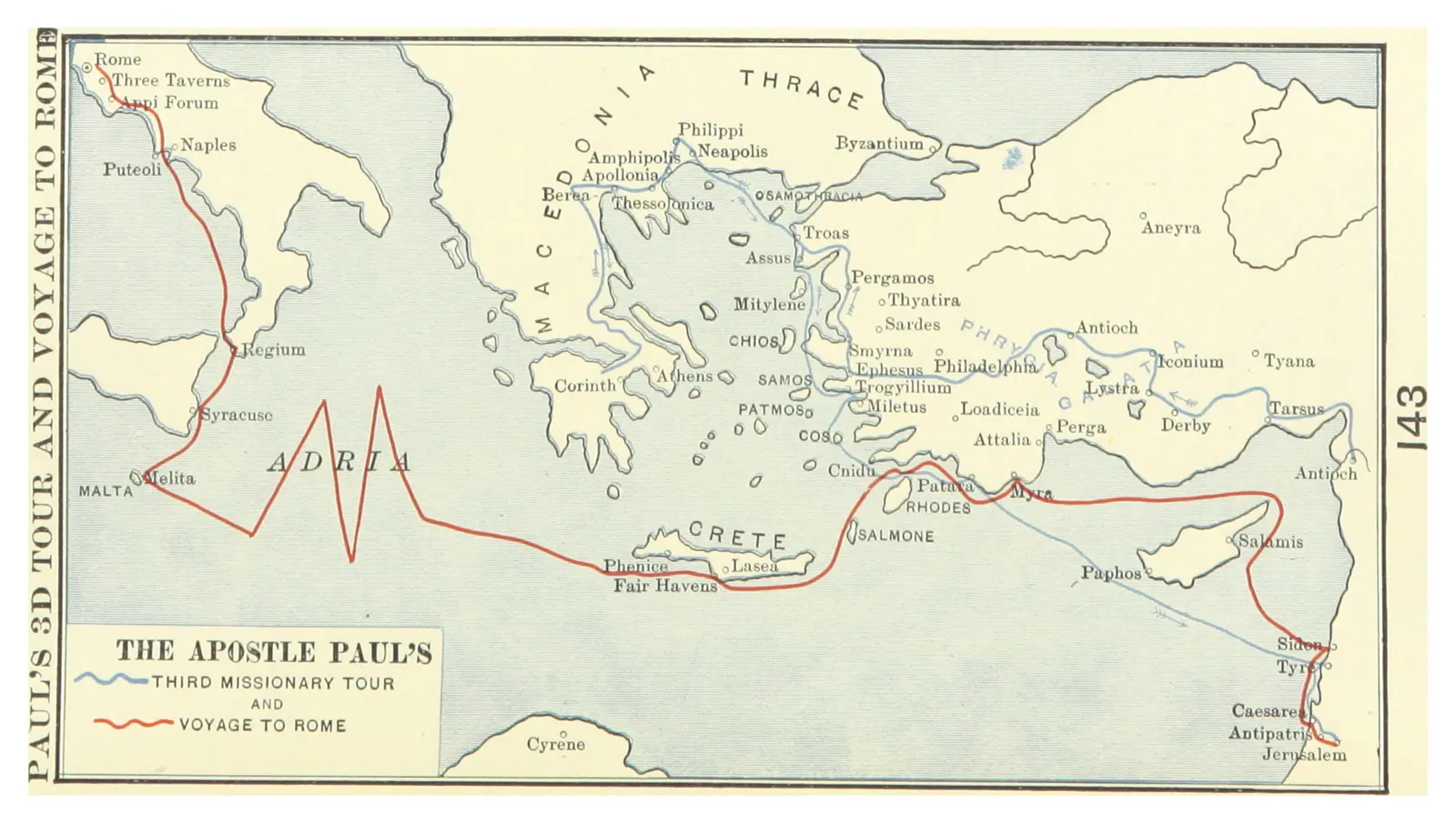
They coasted to Myra, changed ships, ran into contrary winds, and put in at Fair Havens on Crete. Paul warned them. They tried for Phoenix anyway. A northeaster took the ship. They ran before it, undergirded the hull, threw cargo and tackle overboard, and for many days saw neither sun nor stars. They were driven onto an island. Luke calls it Melita. The traditional identification, and the one drawn on the map, is Malta. The ship was lost. The people were not. After three months they sailed again, by Syracuse and Rhegium, to Puteoli, and then by road to Rome. Believers came out as far as the Forum of Appius and Three Taverns to meet them.
Acts ends with Paul in Rome, not with a verdict and not with a death. He stayed two whole years in his own rented house, receiving all who came to him, preaching the kingdom and teaching the things about the Lord Jesus with all boldness, and without hindrance. Those two years are about 60 to 62. That is the last sentence of the book. The dates are the usual ones. Scholars move them by a year or so, and the notes say where the count comes from.
The red line on the map in the journey scene is this voyage: Caesarea, the long beat past Crete, the storm track, Malta, and Italy. The same sheet is the one MacCoun drew in 1899. It is a modern map of an ancient route, and the line is a scholar’s drawing of Acts 27 and 28, not a log recovered from the ship.
Scene 9
What had already been foretold
This family’s reading
The binding was spoken before anyone saw Trophimus in Jerusalem. At Miletus, Paul said he was going up bound by the Spirit, and that the Spirit testified in every city that chains were waiting. At Tyre, disciples said through the Spirit that he should not go. At Caesarea, Agabus bound his own hands and feet with Paul’s belt: so shall the Jews at Jerusalem bind the man who owns this belt, and deliver him to the Gentiles. None of those sentences names Trophimus. They name the chains.
Then the chains arrive, and Luke tells us the occasion. Jews from Asia see Paul in the temple. They have already seen Trophimus the Ephesian with him in the city. They suppose, wrongly, that Paul brought him inside. They shout the teaching charge and the temple charge together. The city seizes Paul. Roman soldiers bind him with two chains and take him. A few days later, before Felix, the temple charge is repeated in so many words: he even tried to profane the temple. The prophecy did not name the friend from Ephesus. The narrative does. Trophimus is the occasion through which the foretold binding comes true.
Paul had already said, before any of this riot, that after Jerusalem he must see Rome. The appeal to Caesar is how that older intention becomes the voyage, the storm, and the rented house where Acts ends. Four letters are traditionally called the captivity letters: Ephesians, Philippians, Colossians, and Philemon. A fifth, 2 Timothy, also shows Paul in prison. Churches have long read the four, and often the fifth, as coming out of the custody that began when Trophimus was recognized. Scholars still argue the city, and they argue whether Paul wrote every letter. That argument is in the notes. It does not empty the story.
We tell it this way at home, and we tell it with pride. The Spirit had said Paul would be bound. Paul had said he must see Rome. A man from Ephesus was seen in the street, and the false charge about the temple is the occasion Luke gives for the binding that had been promised. Trophimus did not preach on the stairs. Being the occasion is not a smaller part. It is how a word already spoken becomes the last chapters of Acts, and, in the church’s long memory, the doorway to letters the New Testament still holds. That is our reading. It is not a conclusion the Bible draws in a verse. We do not tell it shyly.
Scene 10
Left sick at Miletus
Scripture
Erastus remained at Corinth, but I left Trophimus at Miletus sick. Be diligent to come before winter. Eubulus salutes you, as do Pudens, Linus, Claudia, and all the brothers.
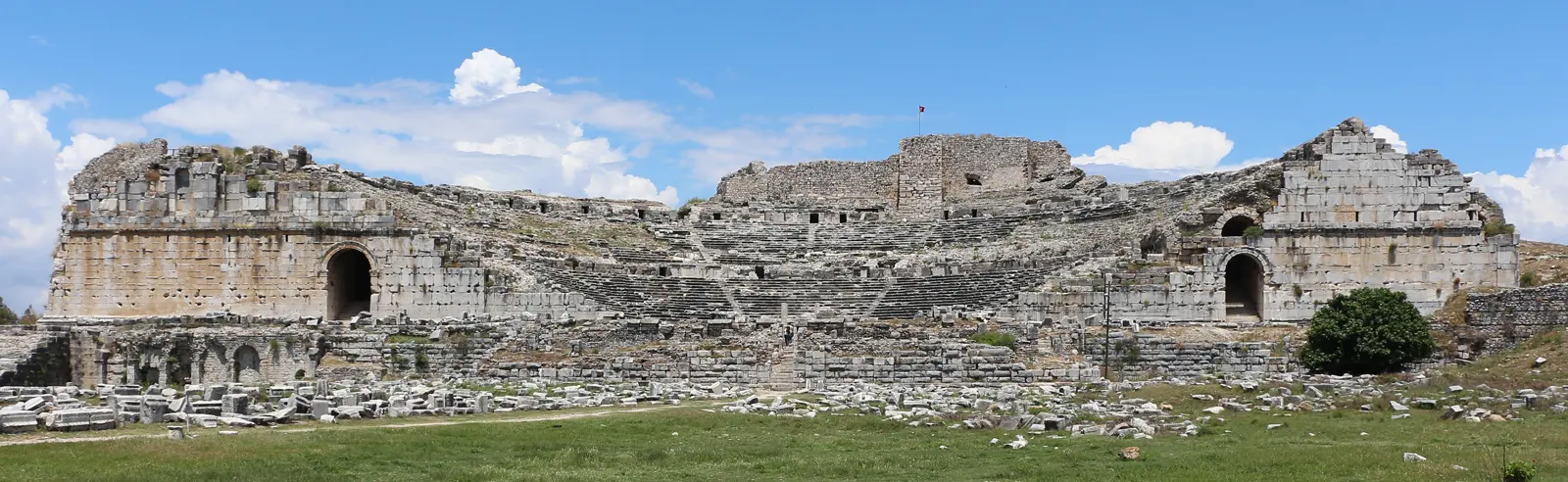
This cannot be the stop at Miletus in Acts 20. On that visit Trophimus was not left behind. He was in Jerusalem afterward, and the riot turns on his being there. Miletus was close enough to Ephesus that the elders of Ephesus could come when Paul sent for them. An illness there was an illness within reach of home.
The letter is written to Timothy. An earlier letter asks him to remain in Ephesus. This one asks him to come before winter, and it says Tychicus has been sent to Ephesus. Readers have long taken that to mean Timothy was still in Ephesus, so the sentence is news about an Ephesian who had not finished the short road home. The letters to Timothy present themselves as Paul’s, near the end of his life. Many scholars think a later writer composed them in his name. Churches have long read 2 Timothy as his last letter, and on that reading the sickness belongs to a journey after the story Acts tells. Either way, Acts itself never returns to Trophimus. The sentence in this letter is the only other mention of him.

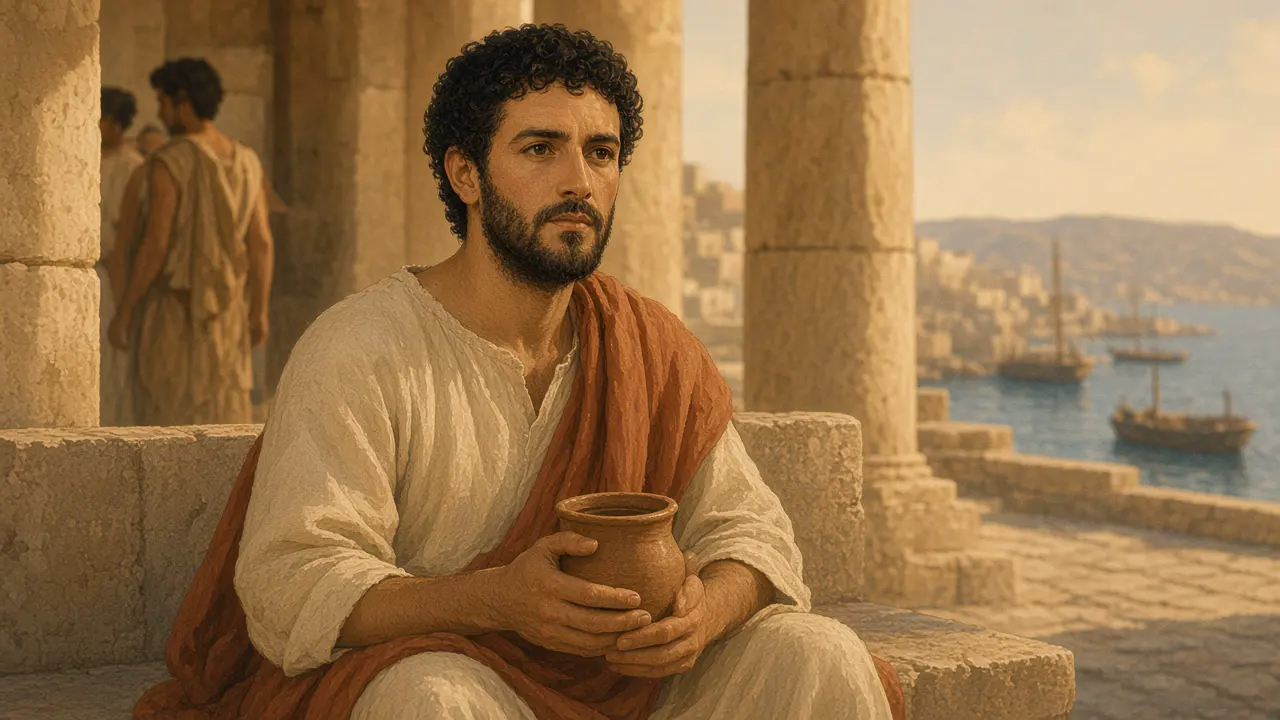
Artistic reconstruction. No authentic likeness of Trophimus survives.
Scene 11
Counted among the Seventy
Later tradition
Luke 10 says Jesus sent out seventy disciples, or seventy-two in some copies, two by two, ahead of him. Luke does not give their names. The Orthodox Church later kept a feast of the whole company, the Synaxis of the Seventy, and it placed Trophimus on that list. The Orthodox Church in America keeps the synaxis on January 4, and remembers Trophimus on April 15 with Aristarchus and Pudens. Greek calendars often keep the three on April 14. That one-day difference is between church books. It is not the gap between the old calendar and the civil one.
Churches that still reckon feast days by the old calendar keep the same liturgical days, and on the civil calendar used now those days fall thirteen days later. April 14 becomes April 27. April 15 becomes April 28. January 4 becomes January 17. The Orthodox Church in America uses the revised calendar, so its April 15 and January 4 are the civil dates. The name beside Trophimus is Pudens, the name in 2 Timothy 4:21.
Acts never says Trophimus was one of the seventy sent out in Jesus’ ministry. He enters the story decades later, as a Gentile companion of Paul. The lists of the Seventy disagree with one another. One of them claims to come from Dorotheus of Tyre. Scholars do not think that early bishop wrote it, and they call the author Pseudo-Dorotheus. Some lives say that, according to Latin notes behind that list, Aristarchus, Pudens, and Trophimus were beheaded in Rome under Nero. The short life published by the Orthodox Church in America does not tell that death. The New Testament does not say how Trophimus died. This page does not illustrate a death the Bible does not tell.
Other saints named Trophimus are different men. The martyrs Trophimus, Sabbatius, and Dorymedon, remembered on September 19, belong to a later persecution. They are not the Ephesian of Acts.
Scene 12
The bishop of Arles, and a debate
Later tradition
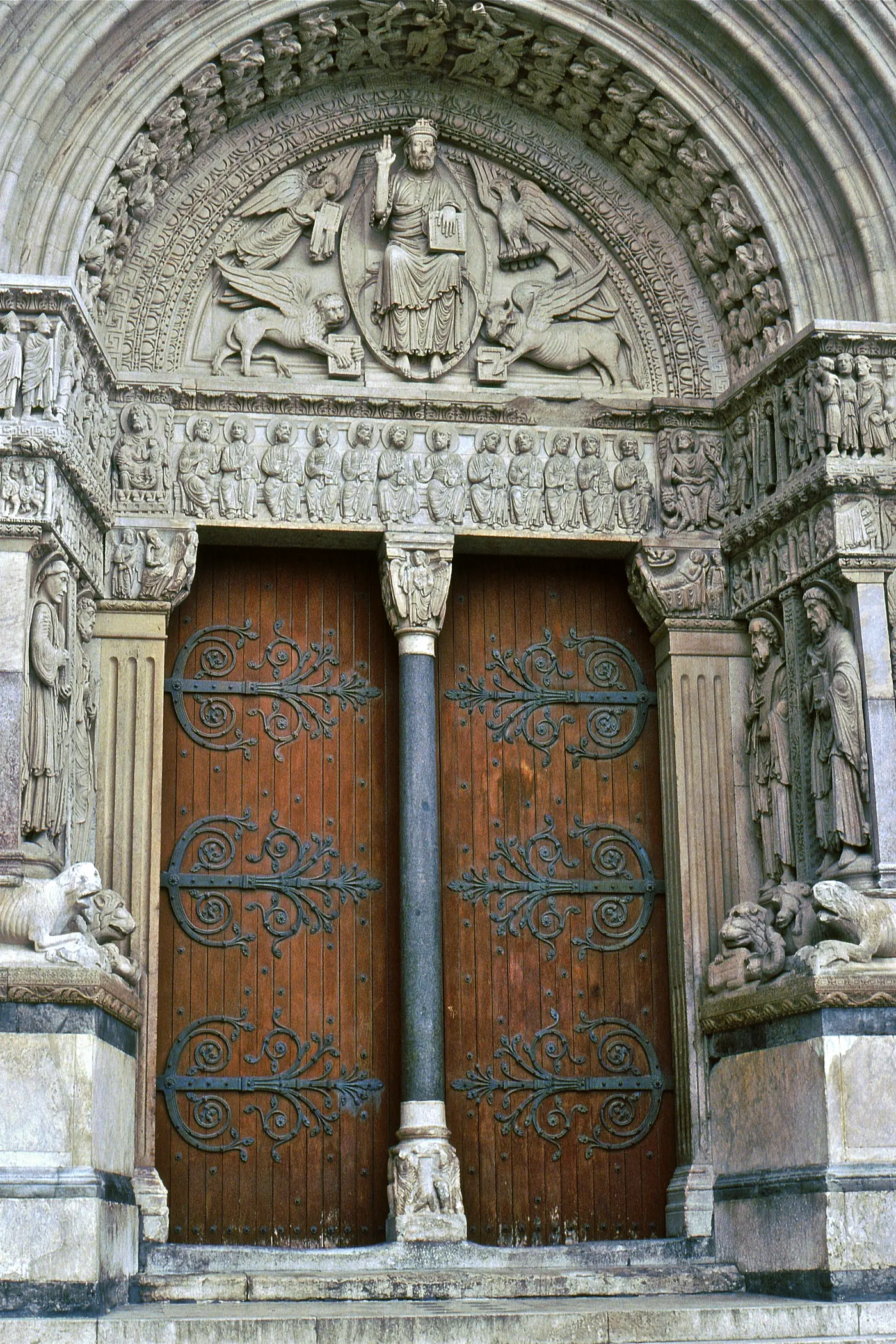
In the western church another story gathered around the name. The older Roman Martyrology, for December 29, remembers a Trophimus at Arles and identifies him with the man Paul mentions. It says Paul consecrated him bishop and sent him to preach there first. His feast on that martyrology is December 29.
Gregory of Tours, writing in the late sixth century, tells a different time. In the reign of the emperor Decius, about 249 to 251, seven bishops were sent to preach in Gaul, and Trophimus was assigned to Arles. Gregory says Trophimus died a confessor, after a holy life. In the same chapter Denis of Paris dies by the sword, and Saturninus of Toulouse is tied to a bull and dragged from the Capitol. The year 250 is about two centuries after Paul. Gregory is writing three centuries after Decius, and he says he is following an account of Saturninus’s death. The Catholic Encyclopedia treated the chapter as a sixth-century tradition with troubles of date, not as a record from the year itself.
Later writers, arguing the rank of the church of Arles, pushed that bishop back toward the apostles. The steps are in the notes. Historians generally keep the two men apart. One is the Ephesian in Acts. The other, if he is historical, is a bishop remembered at Arles and placed by Gregory in the middle of the third century. The identification is a tradition. It is not a statement in the New Testament, and it does not agree with Gregory’s date.

Scene 13
Trophimos, Trofim, Trofimciuc
History & language
The Greek name is Τρόφιμος, Trophimos. It is an ordinary Greek word as well as a name. The word means nourishing, and, of a person, a foster-child: someone who gives care, or someone who was brought up on it. The New Testament uses it as a man’s name. The lexicon entry is in the notes.
The name passed into Church Slavonic, Russian, and Romanian as Trofim, written Трофим. That is the form this page keeps, and the form inside the surname. Ukrainian also uses Трофим, especially as the church spelling. A vernacular Ukrainian form is Трохим. They are variants of the same name, not a second man.
The ending is a second fact. Ukrainian surnames in -чук are formed from a father’s name, a mother’s name, or a trade, with the old sense “son of,” as when a smith’s son becomes Kovalchuk. Some names in -чук are read as a grandson rather than a son. In Romanian, the letter c before u sounds like k, so the spelling puts an i after the c. The whole ending -ciuc is how Romanian writes the Ukrainian sound -чук. A surname Trofimciuc has the shape of “son of Trofim,” or “descendant of a Trofim.”
Surnames written that way are part of the record in Bukovina, where Ukrainian names and Romanian spelling sit side by side. The spelling shows how a man named Trofim became the father of a family called Trofimciuc. The paternal line, which travels with that surname from father to son, points the men of this family back toward Asia Minor and the eastern Mediterranean, the world Trophimus came from. That supports the family tradition. It does not name Trophimus himself as the man at the start of the line.
Scene 14
What our DNA says
History & language
Our own DNA adds something the old books could not. A Y-DNA test of our paternal line, which passes from father to son along with the surname, places it in haplogroup J-M267. Scientists describe this lineage as most common in the Levant and eastern Anatolia and rare in Europe. For a family that lived for generations in Eastern Europe, that points the men of our line back toward Asia Minor and the eastern Mediterranean, the world Trophimus came from.
A Y-DNA test of the paternal line, haplogroup J-M267.
Notes and sources
- Quotations are from the World English Bible, a modern public-domain translation. Its New Testament follows the Majority Text. That is why its Acts 20:4 says the companions went “as far as Asia.” The Greek phrase ἄχρι τῆς Ἀσίας is three words. The English phrase is four. Nestle-Aland and the SBL Greek New Testament both omit it. The SBL edition, edited by Michael Holmes, is an independent text, not a printing of Nestle-Aland. Bruce M. Metzger’s Textual Commentary discusses the phrase. The same note records that Codex Bezae calls the pair Ephesians and writes Eutychus where other copies write Tychicus, a change Metzger thinks may have been suggested by the Eutychus of Acts 20:9.
- The warnings before the arrest are Acts 19:21 (Paul must see Rome after Jerusalem), 20:22–23, 21:4, and 21:10–11. The temple charge is Acts 21:28–29 and, before Felix, Acts 24:6. The hearing is “after five days” (Acts 24:1), and Paul says it is not more than twelve days since he went up to Jerusalem (Acts 24:11). “After some years” in Acts 24:17 is his absence, not the wait for trial. The collection is Romans 15:25–27, 1 Corinthians 16:1–4, and 2 Corinthians 8–9. Luke does not call the men of Acts 20:4 treasurers. Eutychus is taken up dead in Acts 20:9 and brought in alive in 20:10–12. At Patara they board another ship (Acts 21:1–2).
- The years are the usual count: arrest about AD 57, Caesarea about 57–59, the voyage about 59–60, and the two years in Rome about 60–62. One published chronology with those dates is “Chronology of the Apostle Paul”, Biola University’s Good Book Blog, 2021. Other reconstructions move the arrest by about a year.
- The temple warning: the complete stone found in Jerusalem in 1871 by Charles Clermont-Ganneau, now in the Istanbul Archaeology Museums, and a second fragment found near the Lions’ Gate and published by J. H. Iliffe in 1936, Israel Museum, IAA 1936-989. Some accounts date the find itself to 1935. Josephus describes the barrier in Antiquities 15.417 and Jewish War 5.193–194.
- The captivity letters and authorship: “Paul and Authorship,” Bible Odyssey. Seven letters are treated there as undisputed, including Philippians and Philemon. Colossians and Ephesians are disputed. The letters to Timothy and Titus are the group most often judged later. Bo Reicke, “Caesarea, Rome, and the Captivity Epistles,” in Apostolic History and the Gospel (1970), sets Rome and Caesarea side by side. Timothy is asked to remain in Ephesus in 1 Timothy 1:3. 2 Timothy 4:9–12 asks him to come and says Tychicus has been sent to Ephesus. That Timothy was still in Ephesus is the usual reading of those verses, not a separate statement.
- The name Τρόφιμος: Liddell, Scott, and Jones, τρόφιμος, “nourishing,” and of a person a nursling or foster-child, from τροφή. Трофим is the Church Slavonic, Russian, and Romanian form. The Ukrainian dictionary of personal names by L. H. Skrypnyk and N. P. Dziatkivska heads the vernacular form Трохим, from the same Greek word. Ukrainian surnames such as Трофимчук keep the church spelling Трофим.
- The suffix -чук: N. V. Mandrik, “Ukrainian surnames with the suffixes -uk / -yuk and -chuk” (2013), following Yuriy Redko, groups these surnames by a father’s name, a mother’s name, or a trade. The article “Ukrainian surnames as an authentic phenomenon” says -чук once expressed “son,” and in some names a grandson: Іванчук as “grandson of Ivan.” Wiktionary, -чук, records the patronymic use. In Romanian, c before u is pronounced k, so ci is written before u and the whole ending -ciuc spells the Ukrainian sound. Surnames of that Ukrainian shape, written -ciuc, are documented in the Bucovina record, for example Ivanciuc and Ioanasciuc in the Suceava listings discussed by Mircea Ciubotaru, “Bucovina: onomastică şi istorie”. The geography explains the spelling of the surname. The paternal-line result is separate, and it does not identify Trophimus as a named ancestor.
- A Y-DNA test of the paternal line, haplogroup J-M267. It describes J-M267 as common from the Mediterranean to the Indus basin, especially in the Levant and eastern Anatolia, and rarer in Europe, where it appears at low percentages along the southern edge, including Iberia, Italy, Greece, and the Mediterranean islands.
- Orthodox commemoration: Orthodox Church in America, April 15 and the Synaxis on January 4. The OCA’s April 14 lives do not include him. A Greek notice keeps the three on April 14 and traces a beheading under Nero to Latin notes that Dorotheus of Tyre is said to have found. The OCA synaxis page itself calls that catalogue “a list attributed to Saint Dorotheus of Tyre” and notes its errors. Scholars treat the attribution as false and call the author Pseudo-Dorotheus. The OCA life says Edessa. Acts 21:29 says Ephesus. Other martyrs named Trophimus, with Sabbatius and Dorymedon on September 19, are different men.
- Arles: the traditional Roman Martyrology for December 29; Gregory of Tours, Histories 1.30, English rendering in the Cult of Saints database. Denis dies by the sword. Saturninus is tied to a bull and dragged from the Capitol. The Catholic Encyclopedia’s article on early Christian Gaul, volume 6 , treats Gregory’s chapter as sixth-century tradition. Amato Pietro Frutaz, on Trophimus of Arles, sets out the later growth: Zosimus in 417, informed by Bishop Patroclus, calls Trophimus the source of the faith in Gaul without naming Paul’s companion; a letter of 450 says Peter sent him; Caesarius calls him a disciple of the apostles; Ado in the ninth century identifies him with the disciple of Paul. UNESCO’s listing for Arles says the portal “was inaugurated for the coronation” of Frederick Barbarossa as king of Arles in 1178. That is UNESCO’s sentence, quoted here rather than paraphrased.